
The practical difference between 13-gauge and 15-gauge coated work gloves begins with the knitted liner. Gauge describes how densely the liner is knitted: a higher number uses more needles per inch and normally a finer yarn. As a result, a 15-gauge liner is generally finer and less bulky than a 13-gauge liner.
That difference matters, but it is only one part of the glove. Yarn composition, coating material, coating thickness, finish, coverage, hand shape and size all affect how the finished glove feels and performs. A buyer comparing 13 gauge with 15 gauge therefore needs to compare complete constructions, not gauge numbers in isolation.
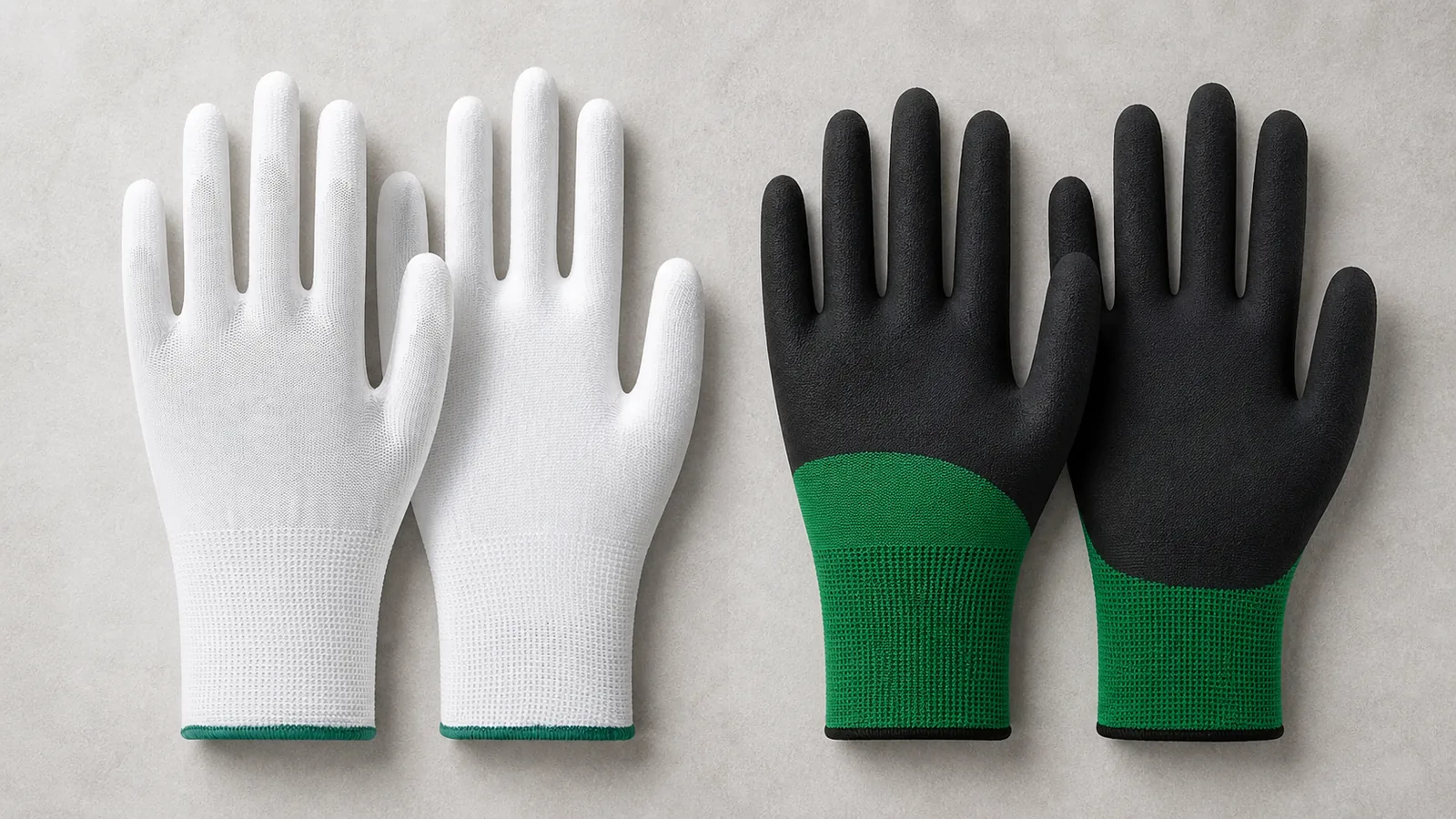
13 gauge vs. 15 gauge at a glance
| Buying point | 13-gauge liner | 15-gauge liner |
|---|---|---|
| Knit construction | Fewer needles per inch and normally a somewhat heavier yarn | More needles per inch and normally a finer yarn |
| Typical hand feel | A conventional fine-knit work-glove base with slightly more body | A finer, closer-fitting base with less bulk |
| Common buying reason | General handling programs that need a familiar balance of fit, handling and cost | Programs that place greater emphasis on tactile feel, close fit or small-part handling |
| Main quotation risk | Assuming the lower gauge automatically means greater durability | Assuming the higher gauge automatically means better protection |
| Best verification | Compare the actual yarn, coating and approved sample | Compare the actual yarn, coating and approved sample |
The table describes general construction tendencies, not guaranteed performance. Gauge is not a cut rating, abrasion result, puncture result or certification. Those claims require current evidence for the exact glove being quoted.
What glove gauge actually tells a buyer
On a seamless knitted glove liner, gauge refers to the number of knitting needles used per inch. Moving from 13 gauge to 15 gauge increases the needle density and usually requires a finer yarn. This often gives the 15-gauge liner a smoother, closer fit and can support more precise finger movement.
The word “usually” is important. Two gloves with the same gauge can feel very different when one uses polyester and the other uses a nylon-spandex blend. Coating can change the result again. A thin PU coating, a smooth nitrile coating and a microfoam nitrile coating create different surface textures, stiffness and handling profiles even when the liner gauge is identical.
This is why a useful wholesale specification writes the complete construction in one line. For example: “15-gauge nylon/spandex seamless liner, microfoam nitrile palm and fingertips, elastic knit wrist.” Writing only “15G nitrile glove” leaves too many variables open.
For a broader specification framework, see the guide to specifying coated work gloves for wholesale orders.
Why a higher gauge is not automatically a safer glove
A finer liner can improve tactile feel, but safety performance comes from the whole glove system. Fiber selection can change cut behavior. Coating formulation and thickness can change abrasion, grip and flexibility. Coverage determines which areas are coated. Fit affects control and wearer acceptance. The required performance standard, if any, must be tied to the tested construction.
For procurement, the correct question is not “Is 15 gauge better?” It is “Which complete construction fits the application, and what evidence is required for the destination market?”
Consider two common sourcing mistakes:
- A buyer selects 15 gauge for dexterity but overlooks a coating that is too thick for the intended small-part task.
- A buyer selects 13 gauge for durability but never confirms yarn, coating mass, pair weight or abrasion results.
In both cases, the gauge number receives more attention than the variables that determine the finished glove. If a specific cut, abrasion or other mechanical result is required, include that requirement in the RFQ and request current documentation for the exact quoted construction.
A 13-gauge FENGAN quotation example: FG-PU02
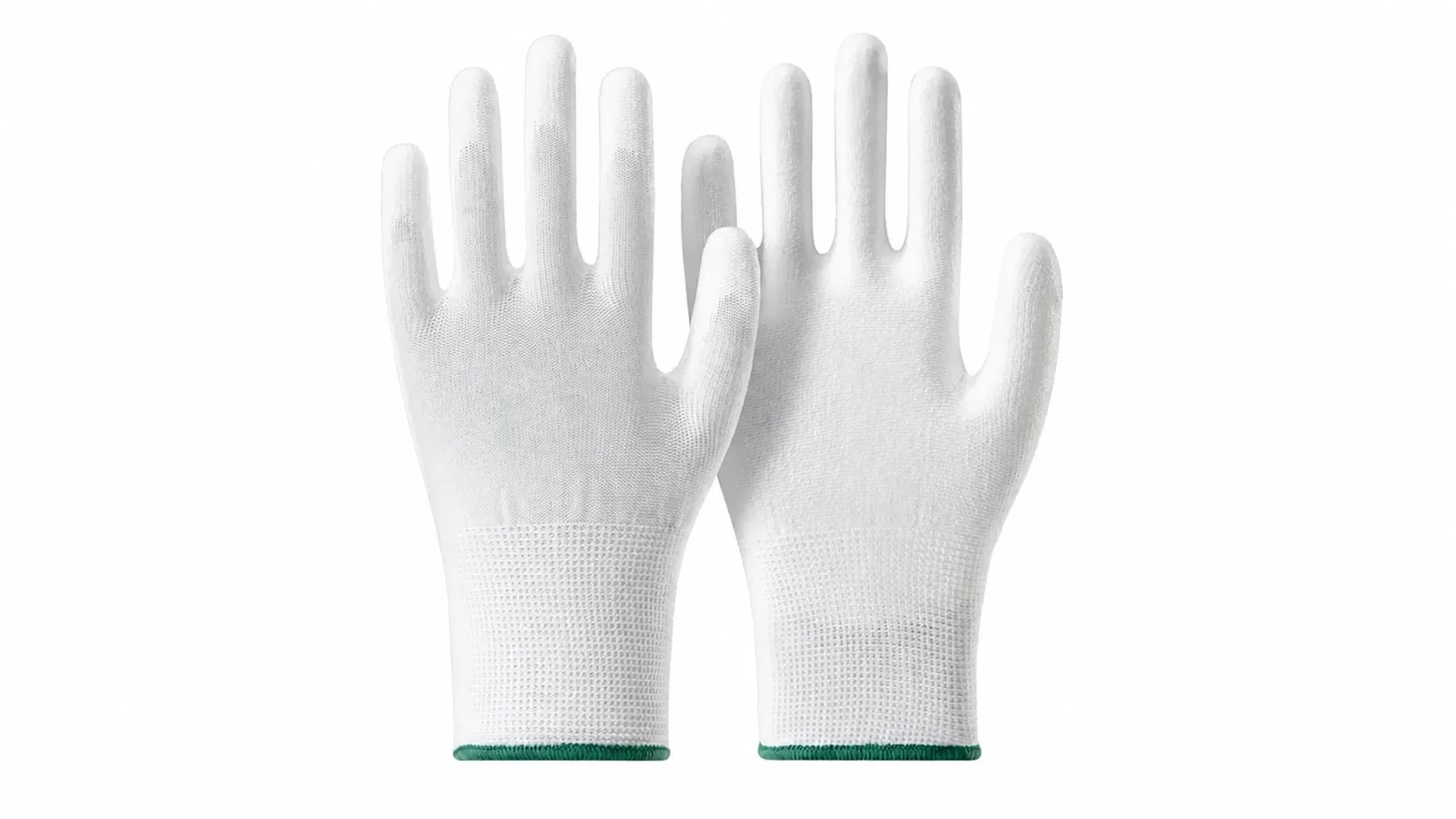
FG-PU02 PU Palm Coated Work Gloves use a 13-gauge polyester or nylon seamless knit with a smooth PU coating on the palm and fingertips. The current quotation range covers sizes 6/XS through 12/3XL with an elastic knit wrist.
This is a useful 13-gauge example for buyers considering light handling or assembly-oriented programs. The smooth PU finish and the 13-gauge liner form one complete construction; neither feature should be evaluated alone. The archived size-8 record is approximately 20 g per pair, but this is a reference for that recorded size and construction rather than a universal target for every size.
When sampling FG-PU02, check fingertip fit, coating consistency, flexibility at the knuckles, size grading and the feel of the approved liner yarn. If the final order changes the yarn, coating, color or target weight, treat the revised version as a new construction for approval.
A 15-gauge FENGAN quotation example: FG-NF01
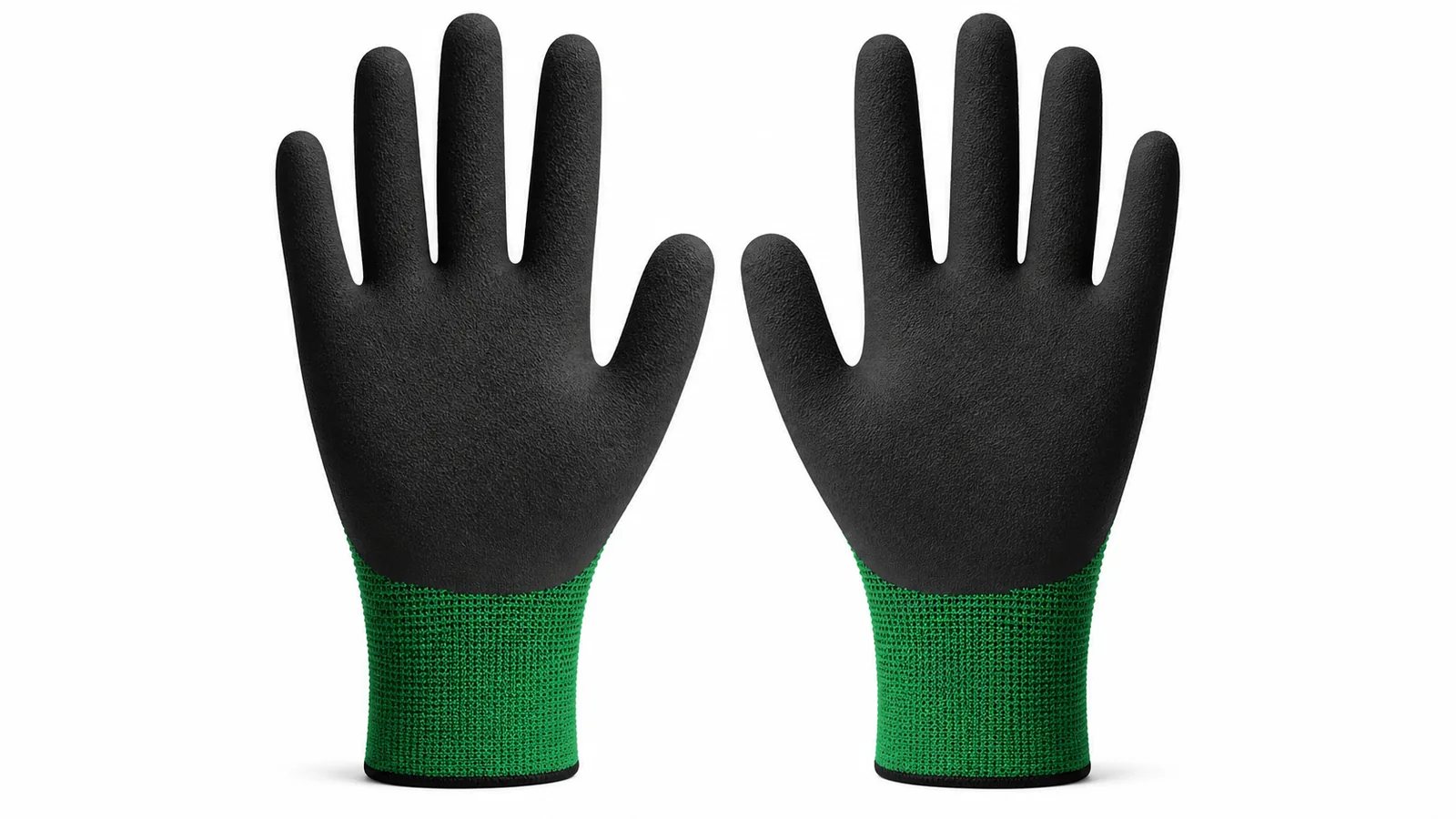
FG-NF01 Foam Nitrile Coated Gloves use a 15-gauge nylon/spandex seamless knit with microfoam nitrile on the palm and fingertips. The current quotation range covers sizes 7/S through 12/3XL with an elastic knit wrist.
The finer liner and spandex content support a close-fitting construction, while the microfoam nitrile finish creates a different surface and handling profile from smooth PU. Its archived size-8 record is approximately 45 g per pair. That number is not a direct gauge comparison with FG-PU02 because the yarn, coating material, finish and total construction are different.
This distinction matters when cost or durability is being discussed. Pair weight can help control a repeated order, but it needs to be connected to the same size, liner and coating specification. The guide on how glove weight affects cost and durability explains why weight is useful only when the comparison basis stays consistent.
Which gauge fits the buying requirement?
Choose a 13-gauge candidate when
- The program needs a conventional fine-knit coated glove with a little more liner body.
- The intended coating and finish are already proven in a 13-gauge sample.
- The target application values a balance of general handling, flexibility and commercial simplicity.
- The buyer wants to compare several common 13-gauge coating constructions before fixing the specification.
The PU coated glove range includes finger-coated and palm-coated options, while FENGAN’s nitrile and latex ranges also contain 13-gauge constructions. Coverage and finish still need to match the application.
Choose a 15-gauge candidate when
- A finer liner and close fit are important to the handling task.
- Small components, fingertip control or extended wear make bulk a concern.
- The chosen yarn blend and coating remain flexible in the actual sample.
- The buyer can test the complete glove rather than relying on the gauge number.
The nitrile coated glove range shows foam, smooth, heavy, standard and textured constructions. Buyers comparing finishes can also use the guide to foam versus smooth nitrile coated gloves.
Keep the comparison controlled
The strongest comparison uses the same target size and records every variable. If two samples differ in gauge, yarn, coating and pair weight at the same time, a wearer may notice a clear difference without being able to attribute it to gauge alone.
A controlled sample sheet should list:
- SKU or sample reference.
- Liner material and gauge.
- Coating family, finish and coverage.
- Size and actual pair weight for that size.
- Total length, palm width and cuff construction.
- Color, logo and packing configuration.
- Required test standard and current report reference, when applicable.
- Approval result and the physical sample retained for production control.
How to evaluate 13-gauge and 15-gauge samples
Start with the actual work motion. Ask sample users to pick up, position, rotate and release the representative item. This gives more useful feedback than squeezing the glove in a meeting room. Use the same glove size for each wearer and record whether fingertip length, palm width or cuff tension affected the result.
Next, inspect the coating. Look for even coverage, clean edges, consistent texture and flexibility after repeated hand movement. A liner may be fine and close-fitting, yet a heavy or inconsistent coating can reduce the expected tactile benefit.
Then check size grading. A good medium sample does not prove that the complete size run is correct. Review the sizes needed for the order and agree the measurement method before production. For larger private-label programs, keep approved samples or signed specifications for the required size range.
Finally, separate subjective handling feedback from formal protection claims. Wearer feedback helps compare fit, flexibility and task suitability. Standardized performance statements require the relevant current test records for the exact glove.
What to include in a wholesale RFQ
A clear RFQ lets the supplier quote one defined construction and identify the variables that still need approval. Include:
- Intended application and working conditions.
- Preferred 13-gauge or 15-gauge liner, plus acceptable yarn materials.
- Coating family, finish and coverage.
- Required sizes and estimated size allocation.
- Color, back-of-hand logo and labeling requirements.
- Inner and outer packing format.
- Destination market and any required performance standard or document.
- Estimated quantity and reference sample, when available.
Private-label artwork can affect sample timing and packing setup, so connect the product approval with the packaging approval. FENGAN’s guide to private-label packaging for work gloves covers the logo, card, bag, label and carton decisions that belong in the order file.
Common questions from glove buyers
Is 15 gauge always more dexterous than 13 gauge?
A 15-gauge liner is generally finer, but the finished glove also depends on yarn, fit, coating material, coating thickness and coverage. The sample remains the best way to compare the complete constructions for a specific task.
Does 13 gauge mean the glove is more durable?
Gauge alone cannot establish durability. Yarn, coating, pair weight, abrasion performance, application and wear pattern all matter. Any formal durability or protection claim needs evidence for the exact construction.
Can one glove model be offered in both 13 gauge and 15 gauge?
It may be possible when the supplier confirms both constructions, but changing gauge often changes yarn, fit, coating behavior and cost. Each version needs a distinct written specification and sample approval.
Should gauge appear on the purchase order?
Yes. Record gauge together with liner material, coating, finish, coverage, size range, color, packing and any required standard. This makes the purchase order more useful for production and inspection than a broad product name alone.
Related product options
- FG-PU02 PU Palm Coated Work Gloves are the current 13-gauge reference when a smooth PU palm-and-fingertip construction fits the program.
- FG-NF01 Foam Nitrile Coated Gloves are the current 15-gauge reference when a nylon/spandex liner and microfoam nitrile finish fit the program.
The better gauge is the one that works inside a complete, approved glove specification. Send FENGAN the application, target market, size mix, quantity and packing brief through the work glove RFQ form, then compare samples against one written construction before the order is fixed.